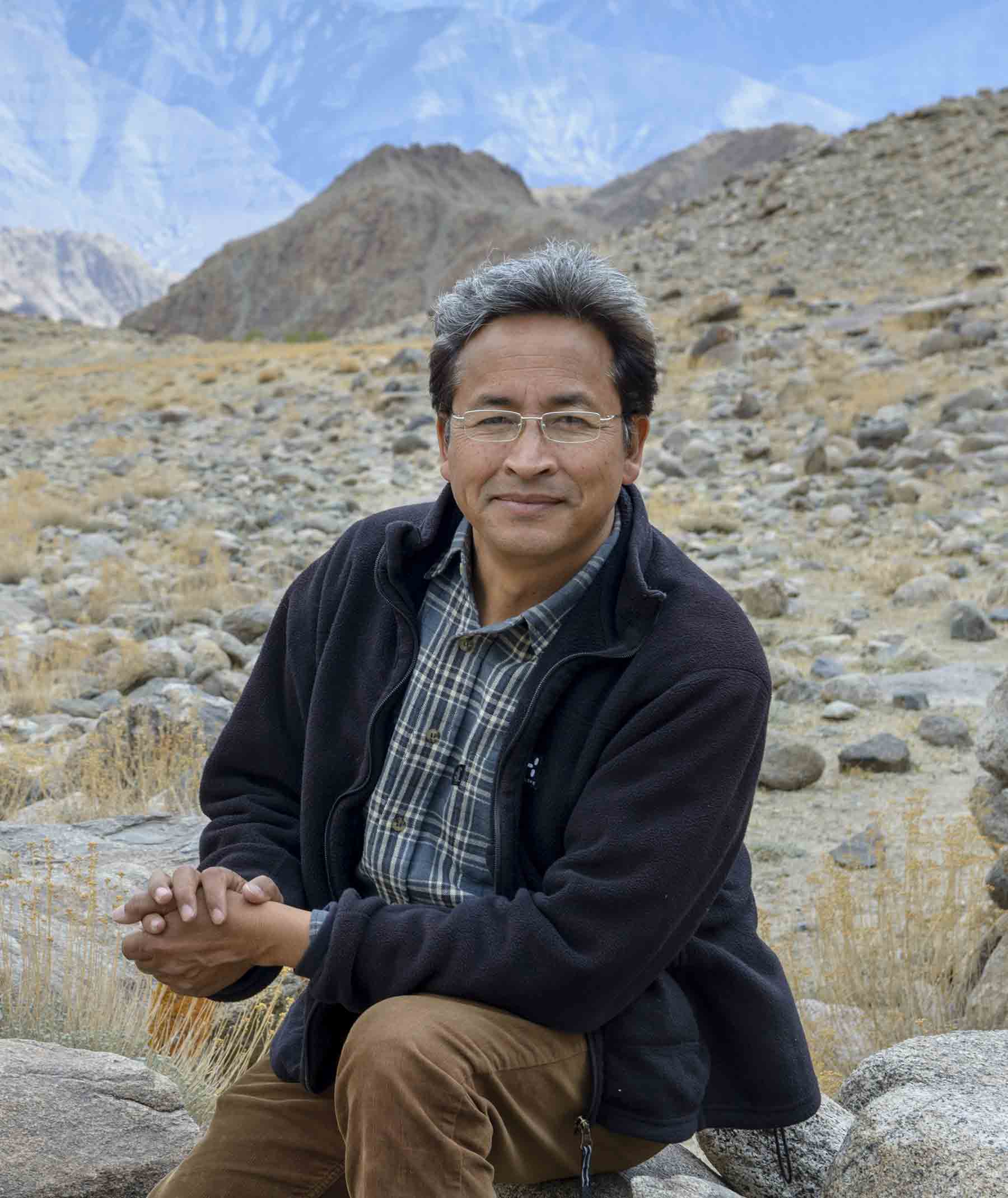
Ladakh
Sonam Wangchuk
Education reform, passive-solar buildings and context-led innovation
Public work profile · No affiliation is impliedIndia For Tomorrow connects a place to its problem, root causes, evidence, workable solutions, pilots and measured results—from national systems to a street-level report.
Choose a place first. The same issue can have different causes, capacity and solutions in two neighbouring districts.
Each part answers a different question. Together they prevent a solution from being recommended before the problem and evidence are understood.
Define the place, population, severity, frequency and trend. Separate a visible symptom from the underlying system failure.
Open this partShow the source, year, method, sample, limitations and confidence. A claim without traceable evidence remains unverified.
Open this partCompare the mechanism, cost, capacity and safeguards—not just the name of a scheme or country.
Open this partState the owner, budget, geography, start date, risks and decision gates before testing at limited scale.
Open this partTrack baseline, target, actual result, last review and whether the intervention should scale, change or stop.
Open this partExplain complex public problems in long-form, readable language without hiding uncertainty or disagreement.
Open this partDocument verified local practices, why they worked and what another place would need to replicate them.
Open this partReport a problem, correct a claim, submit evidence, propose a solution or share measured results.
Open this partThis first chart is an illustrative planning interface—not verified national statistics. Verified datasets will replace model values source by source.
Every pillar leads to detailed pages and the same disciplined path: place, problem, causes, evidence, solutions, roadmap, results and contribution.
Learning, teachers, practical capability and equal-quality schools
12 connected pages02Farm resilience, nutrition, value addition and rural income
18 connected pages03Safe water, sanitation, wastewater and local reliability
30 connected pages04Prevention, primary care, nutrition and financial protection
45 connected pages05Skills, enterprise productivity and dignified local opportunity
46 connected pages06Simple services, timely justice and accountable institutions
45 connected pages07Clean air, nature, resilience and a low-risk transition
48 connected pages08Reliable neighbourhoods, housing and maintainable public assets
58 connected pages09Safe mobility and predictable movement of people and goods
50 connected pages10Quality, productivity, technology and supplier capability
62 connected pages11Access, research, public technology and responsible innovation
62 connected pages12Dignity, belonging, youth, culture and everyday wellbeing
55 connected pages13Safety, agency, health, livelihood and leadership
102 connected pages14Preparedness, strategic capability and critical-system resilience
83 connected pages15Migration, ageing, families and future service demand
94 connected pages16Household, enterprise and public finance tied to outcomes
97 connected pages17Reliable, affordable, productive and resilient energy
106 connected pages18Trade, diaspora, knowledge and international cooperation
101 connected pagesThese cards link to public reporting or institutional profiles. They are examples to study, not claims that the person has joined India For Tomorrow.
Education reform, passive-solar buildings and context-led innovation
Public work profile · No affiliation is implied
Low-cost menstrual-hygiene manufacturing and local enterprise
Public work profile · No affiliation is implied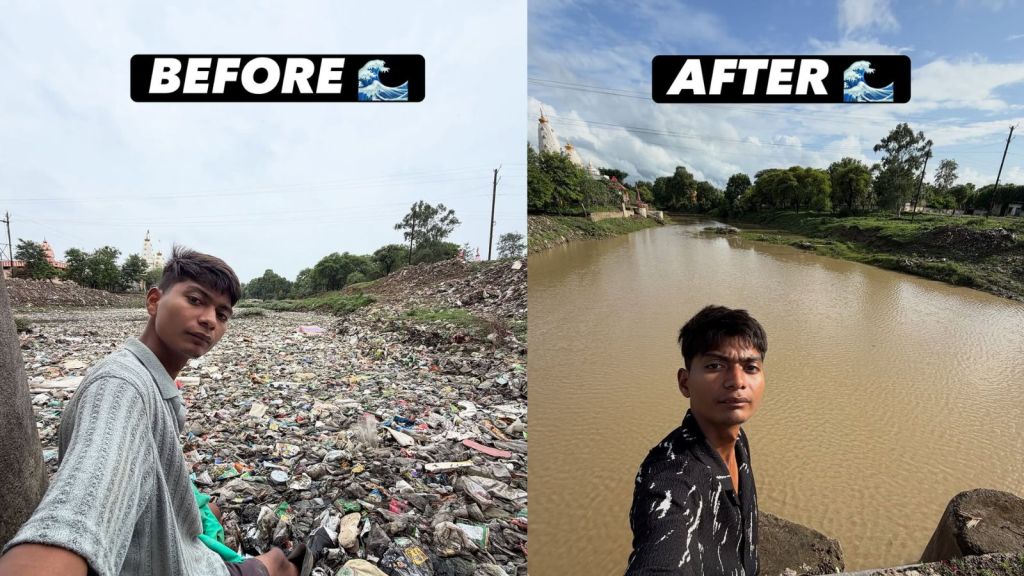
Citizen-led pond and Ajnar River clean-up documented from the ground
Public work profile · No affiliation is implied
Road-safety systems, emergency care and Good Samaritan protections
Public work profile · No affiliation is impliedSearch by name or place, switch sheets, inspect the source and prepare a respectful membership invitation.
Short answers about reporting, evidence, solutions, participation and trust.
It is a public-interest platform for understanding place-based problems, examining evidence, comparing workable solutions and tracking results.
Open Report a problem, add the location, date, clear description and any safe supporting evidence. Reports remain unverified until review.
Yes. Submit only relevant images that do not expose private information or identifiable people without consent.
Reviewers check location, source quality, internal consistency, corroborating evidence and possible duplication before changing its status.
Yes. They can submit a research question, method, dataset, limitations, findings and implementation recommendations for review.
No. Solutions are compared by evidence, cost, capacity, risk and local fit. Uncertain ideas should be piloted and measured before scale.
Directory entries summarize documented public work. Inclusion does not imply membership, partnership or endorsement. Membership requires explicit consent.
Yes. Use the corrections or contribution route and provide the page, disputed claim, proposed correction and supporting source.
Each initiative should state a baseline, target, actual result, review date, affected population and a decision to continue, modify, scale or stop.
No. Donations support the platform but must not purchase favourable findings, rankings or editorial control.